"After the tri-junction in Doklam in the Sikkim sector, this is the most important tri-junction along the Sino-India border."

The Wednesday talks took place amid a war of words between the two sides on perception of the LAC, the de-facto Sino-India border spanning a length of nearly 3,500 km.
The decision was taken at a high-level meeting convened by the Ministry of Home Affairs (MHA), and attended by the Central Public Works Department (CPWD), Border Roads Organisation (BRO) and the Indo-Tibetan Border Police (ITBP) among others.

'The crisis has strengthened America's resolve to work towards building its relationship with India as a bulwark against Chinese aggression'
India has told China not to "shift goalposts" and "confuse" managing the border affairs and restoring peace at the frontiers with the larger issue of the resolution of the boundary question, which is dealt with by different designated mechanisms.
When asked for an update on Tuesday's military-level talks, Chinese foreign ministry spokesperson Hua Chunying told a media briefing in Beijing that both sides reached progress for promoting further disengagement of the border troops at the Western Sector.
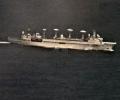
The Chinese research vessel returned to China a few days ago after being under constant watch of Indian Navy vessels, the sources said.

Gen Naravane said a "befitting response" was given to the "conspiracy" to make unilateral changes on the border and that the sacrifice of the Galwan heroes in eastern Ladakh will not go waste.

The army made the comments as part of a statement trashing a media report that said the Chinese military has again crossed the Line of Actual Control in eastern Ladakh at several places and that there has been at least one incident of clash between the two sides.
He said China was exercising sovereignty in its own territory.

The shelters were installed in locations near Tashigong, Manza, Hot Springs and Churup among others, in reflection of simmering tensions between the two sides in the region.
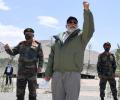
In a fresh incident in eastern Ladakh, the Chinese PLA carried out "provocative military movements" to "unilaterally" change the status quo on the southern bank of Pangong Tso lake but the attempt was thwarted by the Indian troops, the Army said here.

External Affairs Ministry Spokesperson Anurag Srivastava said China's claim over Galwan Valley was not in accordance with its own position in the past, noting that attempts of transgression by Chinese side were invariably met with appropriate response from the Indian troops.
'And this mirror imaging is the most dangerous thing because it leads to tremendous misunderstandings.'

Chinese Foreign Minister Qin Gang will travel to India to attend the meeting of G20 foreign ministers on March 2, during which he is expected to hold his first bilateral meeting with External Affairs Minister S Jaishankar.
We hope that the two sides will work in concerted efforts to achieve the goal, Chinese Foreign Ministry spokesperson Hua Chunying said

Until Delhi and Beijing resolve outstanding border issues within an accelerated time frame, standoffs like Doklam will be repeated across various peaks along the Himalayas, says Mathew Maavak.

India on Wednesday delivered a strong message to China that the 'unprecedented' incident in the Galwan Valley will have a 'serious impact' on the bilateral relationship and held the 'pre-meditated' action by Chinese army directly responsible for the violence that left 20 Indian Army personnel dead.
The enhancement of combat capability by the two armies in the region came even as both the countries continued their efforts to resolve the dispute through talks at military and diplomatic levels.
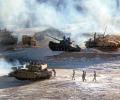
'We must be careful because China has not given its design in Eastern Ladakh.'

Corps Commander-level meeting between armies of India and China was held in Chushul on Tuesday, to resolve the ongoing dispute over Chinese aggression along the Line of Actual Control (LAC) in Eastern Ladakh area, said Indian Army Sources.
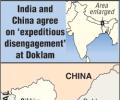
'While overall this is a face saving deal just before the BRICS meeting in Xiamen, any forward military movement at Doklam once again could bring the two Asian giants at loggerheads,' says China expert Srikanth Kondapalli.

'It is because of the bravery of Colonel Santosh Babu and his men that we have not seen a violent escalation anywhere else along the LAC.'

A popular Chinese blogger, detained earlier this year for his comments regarding military casualties of Galwan valley clash with India, has been sentenced to eight months in prison.
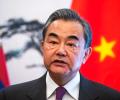
Addressing a symposium on the international situation and China's foreign relations in 2022, Wang said both countries have maintained communication through diplomatic and military-to-military channels.

The next phase of the de-escalation process will kick off only after the fourth round of talks between corps commanders of the two sides.
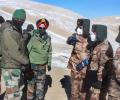
India and China on Tuesday agreed to hold the next round of the Senior Commanders meeting at an early date to achieve complete disengagement from all friction points in eastern Ladakh to create conditions for the restoration of normalcy in bilateral ties.
Over the last few weeks, bipartisan support for India against China has been increasing.
The move, which was approved by the Union home ministry, comes amid a military standoff with China in the eastern Ladakh area.
The sources said the mutual disengagement of troops at the two friction points is likely to be completed within two days, and that there has been 'substantial' withdrawal of forces by Chinese military from the areas.

Although the Malabar is a routine exercise which has been carried out for several years now, security experts attach a lot of traction to it in view of China's assertive behaviour in the South China Sea, observes Rup Narayan Das.

Amid the diplomatic sparring and souring of bilateral ties in the wake of Canadian Prime Minister Justin Trudeau's allegation of Indian involvement in the killing of Sikh separatist leader Hardeep Singh Nijjar, the Special Envoy and Coordinator, Global Engagement Centre, James Rubin said the standoff was a 'tricky subject' as he sought cooperation into the investigation as far as it goes.

The Maldives Jumhooree Party (JP) leader Qasim Ibrahim called on Maldivian President Mohammed Muizzu to formally apologize to Prime Minister Narendra Modi and the people of India, Voice of Maldives, a Maldivian digital news outlet, reported.

Coming ahead of the transition of power from Donald Trump's administration to President-elect Joe Biden's administration after the November 3 US presidential election, the detailed policy document highlights that China is undermining the security, autonomy and economic interests of many nations in the region.
Indian Army Chief General M M Naravane had said on Wednesday that India was hopeful of resolving issues related to disengagement at Patrolling Point 15 (Hot Springs) in eastern Ladakh in the 14th round of talks.
The sources said there was clear sign of withdrawal of structures and troops from the patrolling point 14 in Galwan Valley and that they are likely to move back more than a kilometre in the area.

'The government will ensure that India's pride is not affected as far as the situation along Indo-China border is concerned'

Against the backdrop of the standoff between Indian and Chinese troops in eastern Ladakh, the White House press secy said the United States was closely monitoring the current situation and supports its peaceful resolution.
The talks between the two sides have been going on for the last three months including five Lieutenant General-level talks but have failed to yield any results, so far.

The exercises will be held after a gap of one year as both the sides were locked in a 73-day standoff in Doklam in the Sikkim sector of the border in 2017.
